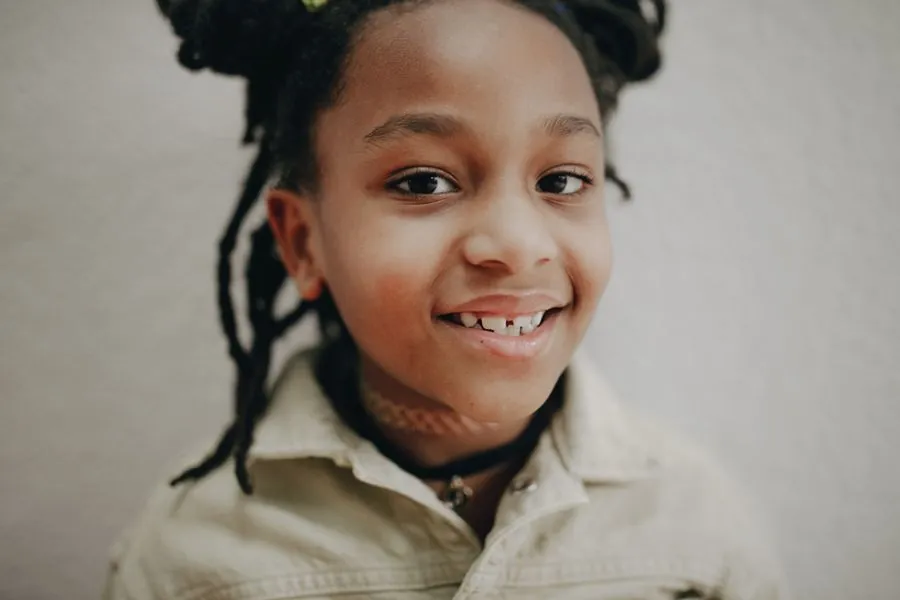
Children's dentistry
For a first visit, a child who is frightened of the chair, or a cavity on a baby tooth.

Children are seen here from the first tooth onwards, and a parent stays in the room for the whole appointment. A first visit is a look and a talk: what has come in, how the bite is forming, and what to do at home. Cleanings, fluoride, sealants and fillings for children are all done in this office.
When to bring your child in.
- Your child has a first tooth, or is close to turning one, and has not seen a dentist yet.
- A tooth hurts, or you can see a brown or chalky white mark on one.
- Your child was frightened at a dental visit before and you want the next one handled differently.
- Your child needs a filling and you are not sure they will sit through it.
- The first adult molars are through and you want them sealed before they decay.
- The front teeth are crowding, or the bite looks off, and you want to know whether braces are coming.

A first visit, step by step.

-
01
You come in with them
A parent comes into the room and stays for the whole appointment. A toddler can sit on your lap in the chair rather than alone in it.
-
02
A look before anything else
Dr. Malik counts the teeth, checks the gums and sees how the bite is forming. With a small child that is often the whole of the first appointment.
-
03
If your child will not open
Nothing is forced. Your child is shown the mirror, the little brush and the water spray before any of them is used, and if they have had enough we stop there and finish at the next visit.
-
04
Cleaning and fluoride
Once your child can sit for it, the teeth are cleaned and polished and fluoride varnish is painted on to harden the enamel. It takes a minute and they can eat soon after.
-
05
Sealants on the back teeth
When the adult molars come through, around six and again around twelve, a thin coating is brushed into the grooves and set with a light. No drill and no needle.
-
06
A filling, if one is needed
A cavity in a baby tooth is numbed and filled, usually in one short visit. For a child who cannot sit through that, nitrous oxide is an option: a gas breathed through a small nose mask, awake and talking the whole time.
How we bill a child's visit.
Check-ups for children are usually one short visit every six months. Most dental plans cover exams, cleanings, fluoride and sealants for children in whole or in part, and part of a filling.
Ask us what it will costChildren's dentistry, answered.
When should my child first see a dentist?
Around the first birthday, or within six months of the first tooth. Almost nothing is done that day; the point is that your child meets the room and the chair before there is ever a problem to fix.
Do cavities in baby teeth need treating? They fall out anyway.
The back baby teeth stay until about twelve, so a cavity in one has years to reach the nerve, and that is what turns into a toothache and an unplanned extraction. Dr. Malik tells you which need filling now and which can be watched.
When will you know whether my child needs braces?
From about age seven the jaws and the adult teeth show what they are going to do, and crowding or a crossbite becomes clear. Dr. Malik fits braces himself, so you hear when to start and what it would involve from the dentist who would do it.
Will my child need X-rays?
Not as a matter of routine. They are taken when the back teeth are touching and decay could hide between them, or when a tooth is not coming through as it should, and your child wears an apron and collar for it.